
Clarke County Most Wanted Fugitives
The Clarke County Sheriff's Office wanted page posts the county's fugitive notices. The roster is small. It changes often, and CCSO publishes no fixed update schedule. One visit may show two entries. The next visit may show more, fewer, or none of the same names.
Each listing pairs a photograph with an offense heading. The sheriff keeps those images on its own site, not copies elsewhere. See a face you recognize? Do not follow or confront the person. Call the official tip line instead. If it is an emergency, dial 911.
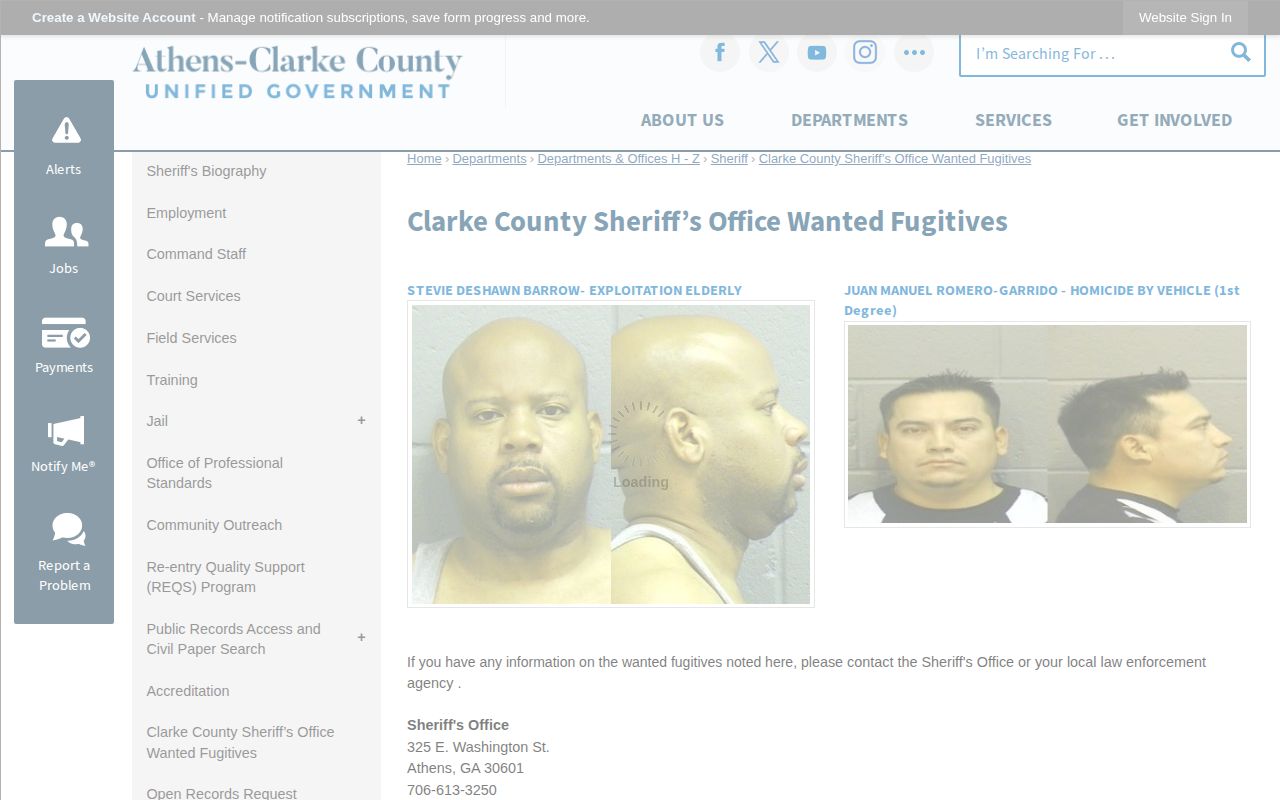
The sheriff's own page is the authority on what is currently listed. Photos and entry counts shift without notice, so treat any screenshot or older view as a pointer back to the live source rather than the final word.
Do not attempt apprehension. A wanted listing is a notice from law enforcement. It is not a license to act. Keep your distance. Report what you know through the official channel.
What a Clarke Wanted Listing Shows
The page stays lean. It offers no full criminal history, no case outcome, no home address, and no complete warrant file. What follows covers what the listing plainly shows and what it leaves out.
| Listing element | How to read it |
|---|---|
| Name | The person's listed identity. Confirm identity through CCSO before attaching a news story or court file. |
| Photograph | An image published by the sheriff. It is not a conviction record and should not be copied into a gallery. |
| Alleged offense | The heading states the alleged basis for the notice. It is not the final court disposition. |
| Tip instruction | The page directs the public toward official tip channels and warns against attempting apprehension. |
| Update status | No fixed cadence is stated. The count and listings should be treated as live and time-sensitive. |
Two gaps matter most. Someone can hold an active warrant yet never appear on this selective page, and a listing says nothing about later court events. The wanted page works as a public-safety notice only. For custody questions, use the jail roster. For what happened to a filed charge, the court file answers that.
The Georgia Department of Corrections offender search covers different ground: people in state custody after sentencing. A result there cannot confirm a Clarke County warrant. A missing profile proves nothing about the county's wanted list either.
Read the Clarke Wanted List
Start with the official source. Keep your response narrow. A third-party repost is never a fair stand-in for the sheriff's current page. And do not assume a wanted person sits in Clarke County Jail. A notice alone says nothing about where someone is held.
- Open the CCSO wanted page and note the access date.
- Read the name, photograph, and alleged-offense heading as a notice of charge.
- If the person is recognized, do not approach, follow, call, or attempt a detention.
- Send the tip through the anonymous Warrant Tip Line or the official Crime Stoppers route.
- For a record question, use the county custody and court sources rather than relying on the wanted card.
If the question is a recent booking, the Clarke County custody and booking records can match a name to an MID number, booking time, arresting agency, and release field once the county's delay passes. A missing result is not a mystery solved; the person may simply not be published yet, may have been released, or may sit in another county's system.
Clarke Tips, Rewards, and Safety
Three numbers do the work here. CCSO runs an anonymous Warrant Tip Line at 706-338-3432. Crime Stoppers Reward Information sits at 706-705-4775. The main office line is 706-613-3250. The wanted page points to the tip route and warns against direct action. Remember that a reward line does not promise cash for every call; the official organization decides each reward on its own.
Anonymous Warrant Tip Line
706-338-3432
Use the official tip channel. Do not approach or attempt to confirm a person's location yourself.
Crime Stoppers Reward Information
706-705-4775
Ask the listed program about anonymity and reward rules when submitting information.
Clarke County Sheriff's Office
706-613-3250
Routine warrant and records questions belong with CCSO. Call 911 for an emergency.
A good tip sticks to what you saw. Skip the guesses and photo sharing. Don't hand down a verdict of your own, either. Police can match your information against their warrant and case systems far better than any caller could.
Check a Clarke County Warrant
A most-wanted list and a warrant check are two different errands. No public CCSO criminal-warrant portal exists. The sheriff does run a civil-process search, but that tool covers summonses, subpoenas, evictions, protective orders, garnishments, and foreclosures. Calling it a criminal warrant database would be wrong. The Magistrate Court warrant-application page explains how a warrant gets requested, not whether someone already has one.
State guidance suggests contacting the local sheriff. Have a first name, last name, and date of birth ready. An office may insist on an in-person visit. Someone with a warrant can be arrested on the spot. If you fear a warrant concerns you, talk with a lawyer and the issuing court before you go anywhere.
- Gather the full legal name and date of birth, plus a case number if known.
- Call CCSO at 706-613-3250 or contact the relevant clerk or court and ask what confirmation process applies.
- Do not treat a civil-process result, a news story, or the absence of a wanted card as a criminal-warrant answer.
- Ask an attorney or the issuing court about a safe resolution path rather than trying to evade service or arrest.
The Georgia warrant guidance outlines the general local procedure. Helpful as it is, it does not create a live statewide warrant search on a web page.
Clarke Warrant Records Explained
Jargon can make a warrant search sound more complete than it really is. The distinctions below keep each official product in its own lane, without guessing at any person's actual file.
| Record type | What it means here |
|---|---|
| Criminal warrant check | A question about an active court-issued criminal warrant tied to a person or case. Confirm through the sheriff, clerk, or court. |
| Most-wanted notice | A selective CCSO publicity list. It is not a complete inventory of active warrants. |
| Civil-process search | A service search for civil papers and related items. It is not a criminal warrant lookup. |
| Warrant application | A court process for seeking issuance. It does not itself confirm an active warrant for public lookup. |
A warrant is not the same as a conviction. The court record may later show dismissal, a changed charge, or another disposition. The safest language is “the sheriff or court reported an active warrant” when that is what the custodian confirms.
Clarke Warrant Check and Court Path
Two sources answer two halves of a warrant question. A call to CCSO can point you toward the right place to ask about an active criminal warrant. The clerk or the court itself is where docket activity lives. That's where you find a warrant number, an appearance date, or a later outcome. Fields in the jail recap for warrant number and court jurisdiction can bridge those systems. A blank field means nothing at all. It is not proof that no warrant or case exists.
Each court here has its own lane. Magistrate Court handles first appearances and local warrant functions. Felonies belong to Superior Court. State Court takes misdemeanors and related matters, and Athens-Clarke Municipal Court covers ordinance issues plus qualifying misdemeanor and traffic cases. The Clarke County courts portal and the clerk gateway are the quickest ways to find the right case path. Be careful with names, too. A wanted card can name the wrong court, and a civil-process search may show a service item rather than a criminal warrant. Match the case number and identity before you treat two records as one person.
If the warrant might affect you or someone close to you, a lawyer can reach the issuing court and plan a lawful response. That route beats testing the warrant in public or dodging service. Everyone else should stick to the official tip line. Let law enforcement make the custody calls.
Why Wanted and Jail Records Differ
CCSO wears several hats. It serves criminal warrants, runs the jail, transports prisoners, and keeps the courts secure. Arrests also come from ACCPD, UGA Police, Winterville Police, state agencies, and federal agencies, each of which may pursue its own notices. The wanted page is curated by the sheriff. The jail recap is an operational report with an arresting-agency field. Neither list can substitute for the other.
The gaps make sense once you see the systems side by side. A person can be wanted but not yet booked. Someone might be booked in another county, already released, or held in a different system entirely. A person can even sit in the jail without showing up on the selected wanted page. Cross-check custody status with the official source, then follow the court case for the outcome. The official Clarke County Sheriff's Office page gives the agency context behind both the warrant and wanted paths, and it stays the best place to confirm current contact details.
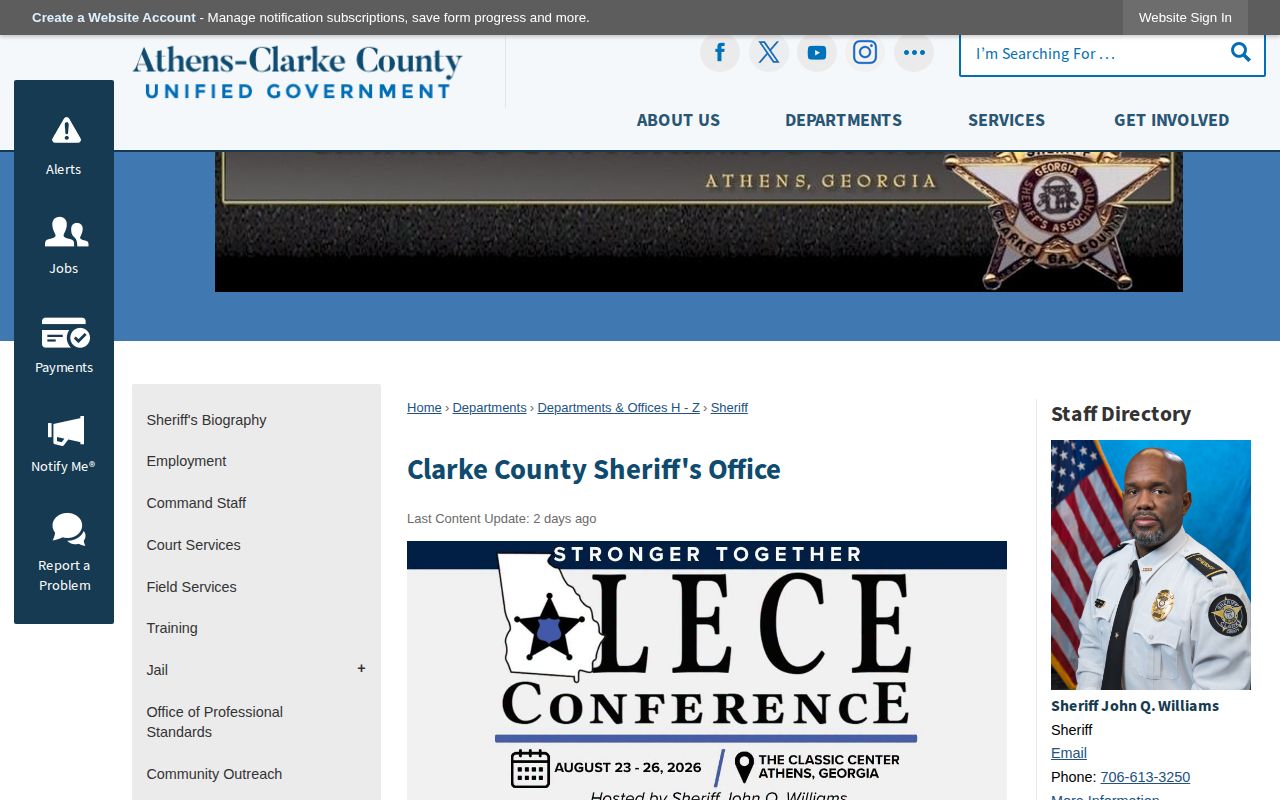
The sheriff's page adds useful context for both the warrant and wanted paths. Treat it as a contact and records source, not as proof that any named person is still at large.
After a Clarke Wanted Match
Keep your distance and let trained personnel make contact. Do not post a location, attempt a private arrest, or use a photo to identify someone to strangers. Time-sensitive tips go to the official tip route. A true emergency goes to 911. Anyone who may be the subject of a warrant should ask a lawyer or the issuing court about the lawful next step.
For a recent booking, go back to the county's official roster and seven-day recap. Those tables can reveal current custody, a delayed booking, or a release record. They will not settle the case, though. The final result comes from the correct Clarke court, so pull the disposition there. Booking charges can shrink or vanish as a case moves forward.